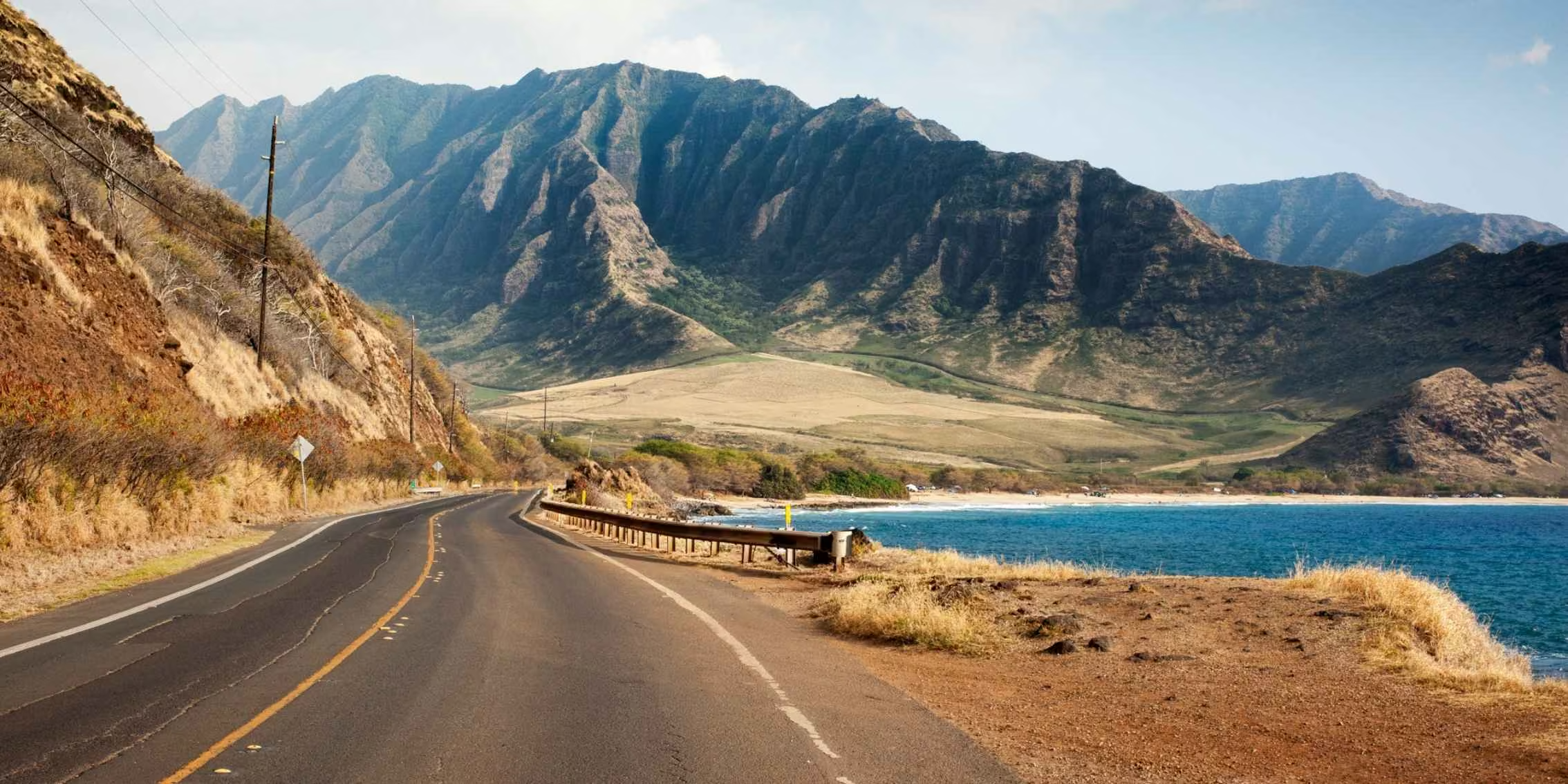
You learn more from a shelf of masterworks than you do from a drawer full of lenses. Every great photographer has a library that shaped their vision and taught them the language of image making. We've curated a list of the best photography books to help you move from snapshots to masterpieces!
In short...
To learn street photography and pro composition, explore The Decisive Moment and Farewell Photography.
Tulsa is a cult favourite for photographers wanting to master the raw and participatory snapshot aesthetic.
Every photography book collection should include On Photography to understand the ethics of image making.
Our online photography course offers access to professional mentorship and a global creative community. Work with experienced tutors to get a head start on your career.
The Decisive Moment by Henri Cartier-Bresson (1952)
This book defined the "decisive moment" as the instant where form and emotion meet. It transformed candid snapshots into high art and remains an essential guide for anyone collecting the best photography books.
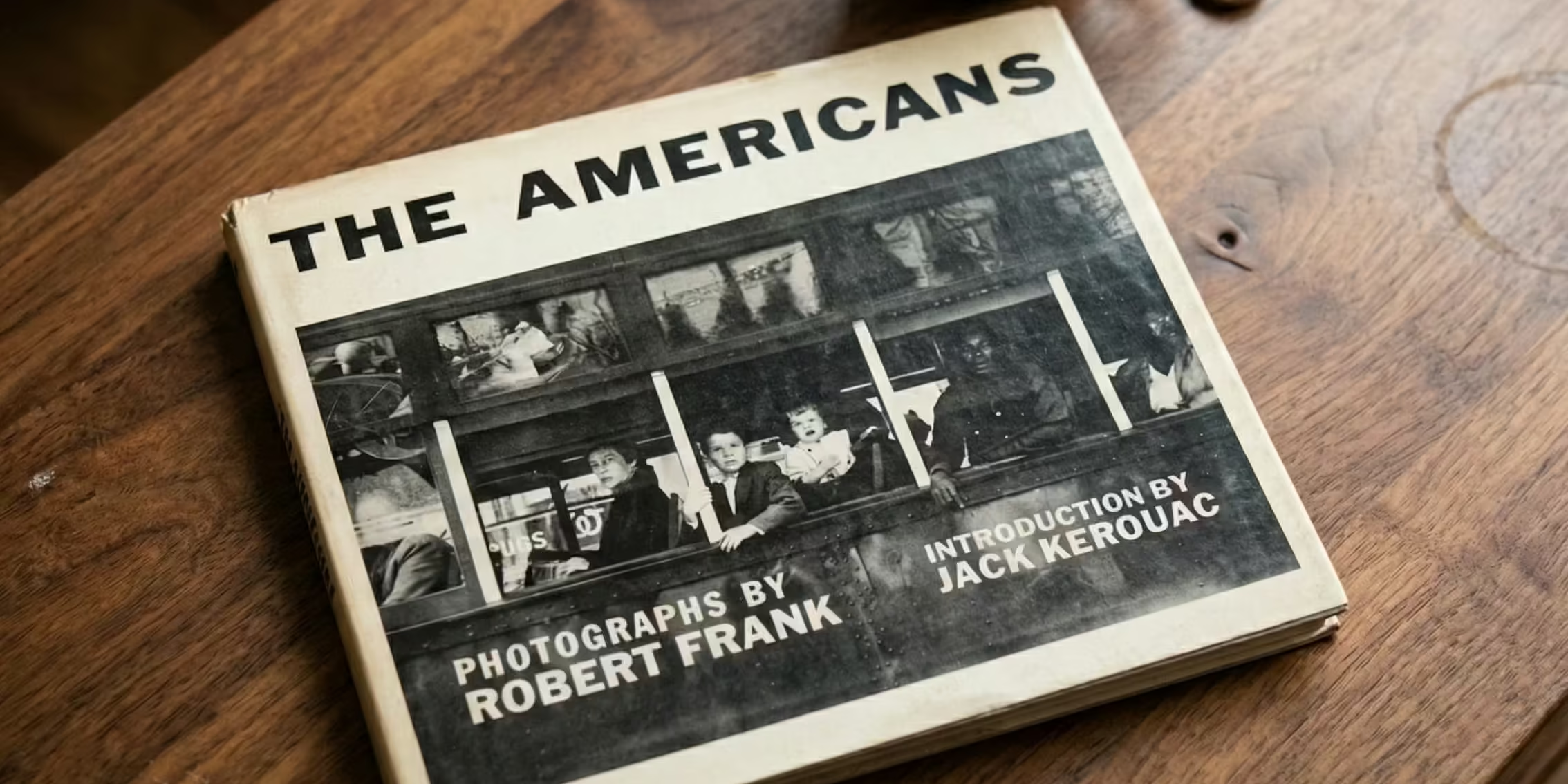
The Americans by Robert Frank (1958)
Frank used 83 images to expose the racial divides and consumerism of 1950s America. He changed the way we look at books on photography by focusing on personal documentary rather than commercial gloss. His raw and road-trip style made the mundane feel mythic and inspired generations of artists.
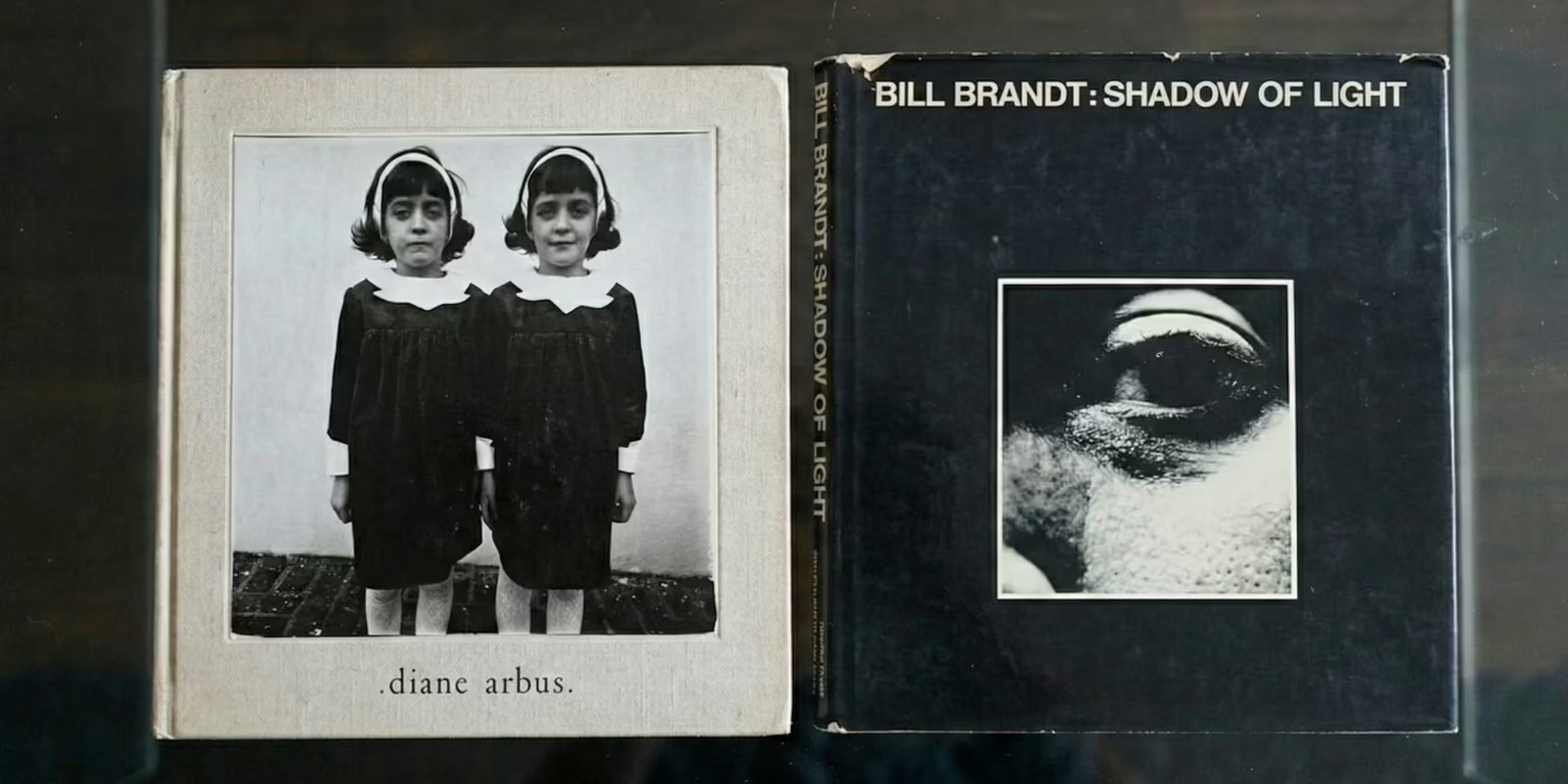
Shadow of Light by Bill Brandt (1966)
Brandt wove distorted nudes with northern English grit and London fog to pioneer high-contrast chiaroscuro. His work bridged surrealism and social realism to influence fashion and fine art with bodily abstraction. These images birthed a visual noir that evokes mythic unease.
Tulsa by Larry Clark (1971)
Clark immersed himself in the nihilistic world of drug use and youth in Oklahoma through gritty black-and-white images. His participatory style birthed the "snapshot aesthetic" that now dominates modern fine art. It remains a shocking and authentic depiction of the American underbelly.
Farewell Photography by Daido Moriyama (1972)
Moriyama used grainy and out-of-focus imagery to capture the sensory overload of Tokyo. This book is a punk manifesto that rejects Western polish for raw and urban energy. It stands out as one of the coolest photography books for your shelf and remains a staple for street photography fans.
Ways of Seeing by John Berger (1972)
Berger dismantled art history to help viewers reclaim images from the male gaze. He taught us that seeing is a political act that requires constant visual literacy. This book remains a revolutionary tool for anyone wanting to demystify the canon of art.
An Aperture Monograph by Diane Arbus (1972)
Arbus confronted the viewer with society's outsiders through stark intimacy that blurred repulsion and empathy. Her square-format portraits redefined voyeurism as existential inquiry and cemented her as a seer of human deviance. This monograph forced a reckoning with the fragility of normalcy.
An Aperture Monograph by Diane Arbus (1972) & Shadow of Light by Bill Brandt (1966)
Worlds in a Small Room by Irving Penn (1974)
Penn placed tribal artisans from across the globe into a simple studio corner to strip away exoticism. He elevated ethnographic studies to the level of pure art by focusing on the universal dignity of his subjects. This book is a masterclass in how studio abstraction can honour diversity.
On Photography by Susan Sontag (1977)
Sontag dissected the medium as a consumerist souvenir that can numb our empathy in a spectacle society. These essays are vital for decoding the ethics of images in a world flooded with pictures. She arms the viewer against passivity and asks us to think about the moral cost of the camera.
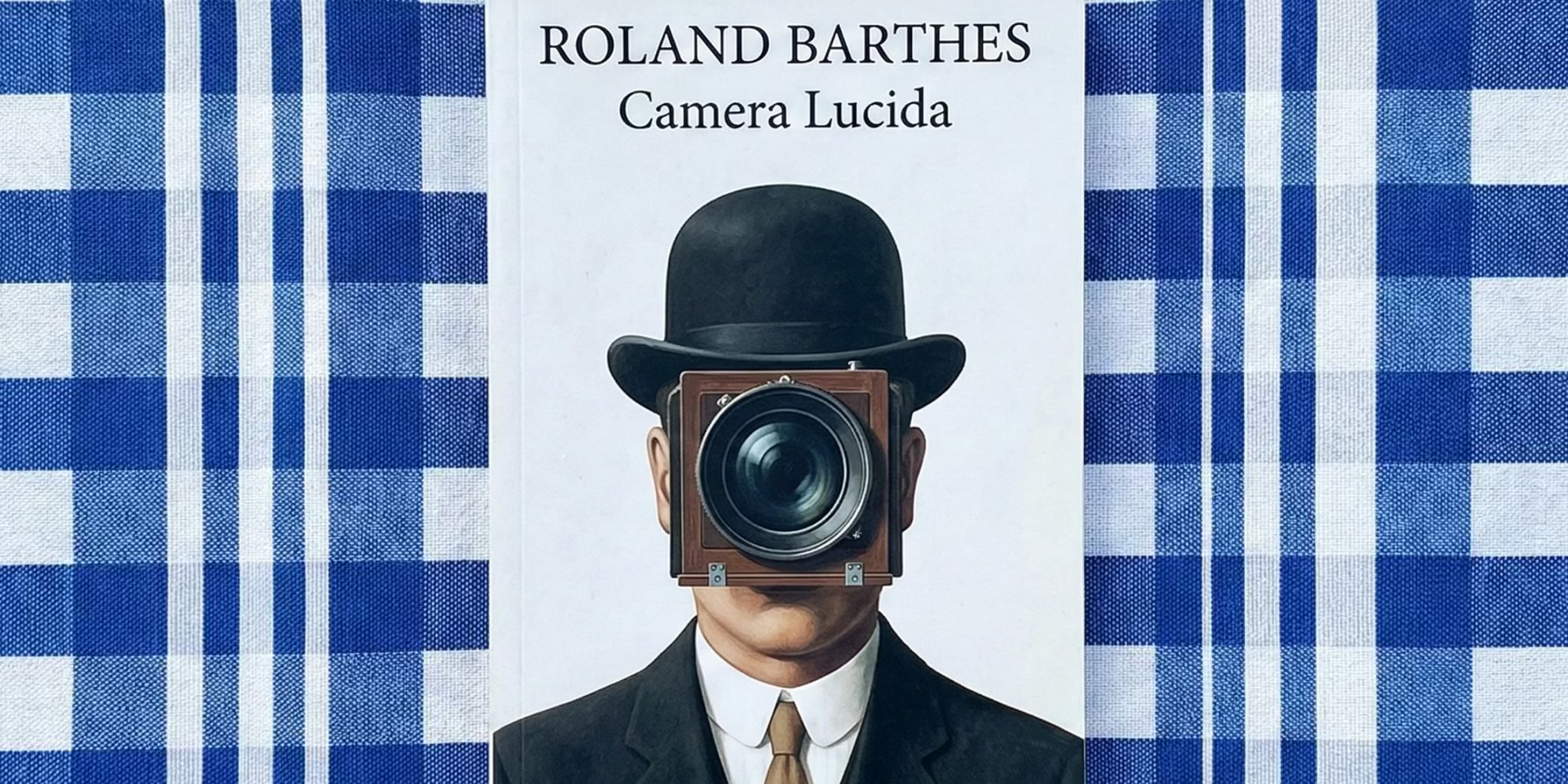
Camera Lucida by Roland Barthes (1980)
Barthes sought the essence of the medium while mourning the death of his mother. He introduced the idea of the "punctum" as the personal wound found in a great image that haunts the viewer. It's a deeply intimate and theoretical look at the soul of photography.
Camera Lucida by Roland Barthes (1980)
Uncommon Places by Stephen Shore (1982)
Shore turned petrol stations and motels into luminous colour studies with large-format precision. He proved that banal American vistas could have the same visual power as a grand mountain range. His work pioneered the idea that everyday scenes are worthy of high-art status.
The Making of 40 Photographs by Ansel Adams (1983)
This is a fantastic choice for those looking for photography books for beginners because it demystifies the technical alchemy of the craft. Adams reveals the obsession behind his nature photography and explains his famous Zone System in detail.
The Ballad of Sexual Dependency by Nan Goldin (1986)
Goldin captured the highs and lows of her bohemian inner circle in New York through a snapshot-diary style. Her work redefined intimacy in the medium by telling unfiltered stories of love and addiction. This book proved that the personal can be universal.
The Last Resort by Martin Parr (1986)
Parr skewers English seaside kitsch with garish saturation and satirical detachment to critique Thatcher-era vulgarity. He elevated amateur snapshots to social comedy by making the grotesque both endearing and indicting. This book remains a definitive weaponisation of colour in documentary work.
Immediate Family by Sally Mann (1992)
Mann captured her children in the Virginia wilds to evoke wet-plate romance amid childhood's feral innocence. The controversy over the maternal gaze probed family as a primal and haunting myth. These elegiac images challenge taboos while documenting mortality with raw intimacy.
Sumo by Helmut Newton (1999)
Newton used provocative spreads to critique the spectacle of gender and power. These massive images are essential for any shelf of photography coffee table books because they redefined the edge of commercial fashion. He fused eroticism with high-glamour in a way that had never been seen before.
The Kids Are Alright by Ryan McGinley (2003)
McGinley’s iconic photography book {mythologised| mythologized} New York youth with a pastoral hedonism. He blurred the line between documentary and staging to capture a specific sense of millennial freedom. His work feels like a sun-drenched utopia that bottles the energy of being young and free.
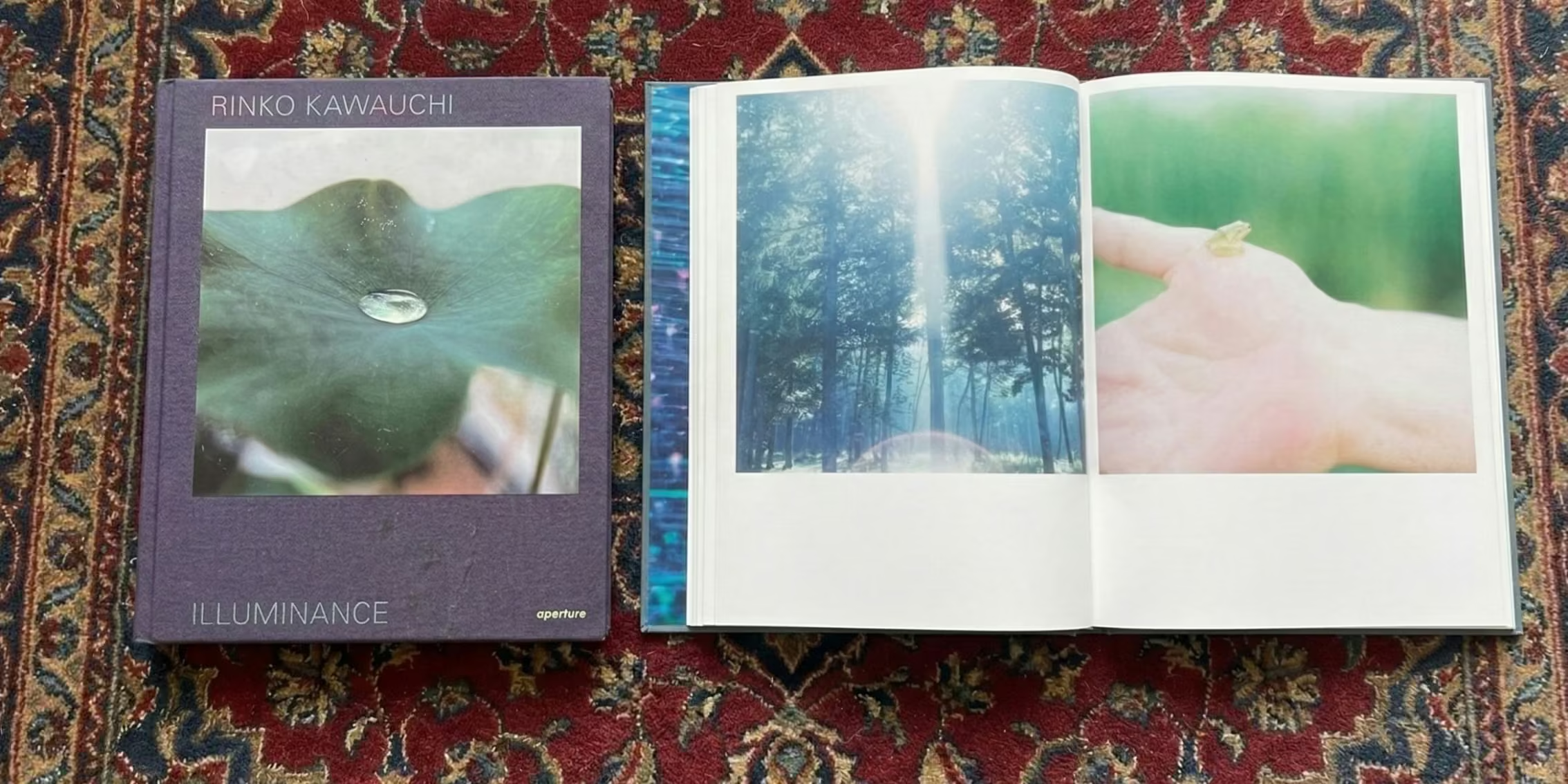
Illuminance by Rinko Kawauchi (2011)
Kawauchi meditates on small daily moments like light flares and blossoms in jewel-toned frames. Her work offers a quiet reverence for the beauty of impermanence and quotidian epiphanies. It's a contemplative book that proves you don't need a grand subject to create a holy image.
Illuminance by Rinko Kawauchi (2011)
Wolfgang Tillmans: 1995–2015 by Wolfgang Tillmans (2015)
Tillmans liberated the image from the traditional frame by playing with scale and installation. His work spans from rave-era ecstasy to post-9/11 fragility and asserts total sculptural freedom for the photographer. He is a master of making the viewer question how they see the world.
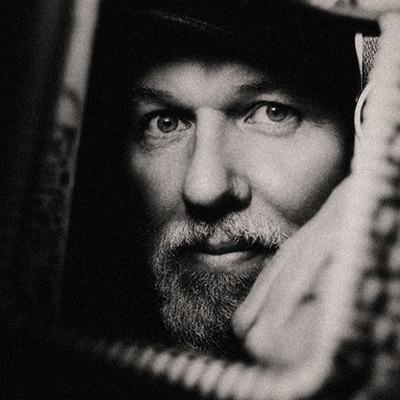
Tips by PI Tutor Steven Vote
Steven's Essential Photography Books
Photographers and my students often ask how they can improve, and they usually expect a conversation about gear. Some of the most valuable lessons come from books that shape how we see, how we think, and how we experience the world as photographers.
One classic I always recommend is The Photographer’s Eye by Michael Freeman. It is a tremendous guide to composition and visual design. Freeman explains how lines, balance, framing, and visual flow guide a viewer through an image. After reading it, you notice composition everywhere, not just when you are holding a camera.
Another essential book is Understanding Exposure by Bryan Peterson. Peterson has a wonderful way of explaining aperture, shutter speed, and ISO in plain language. For many photographers it is the book where exposure finally “clicks,” turning confusing technical ideas into practical tools.
More recently I picked up The Traveling Photographer’s Manifesto by David Hobby. What I like about this book is that it shifts the focus away from equipment and toward curiosity, observation, and connecting with people and places.
Finally, I will mention a slightly different kind of book, my own, Fulfilled: Unlocking Passion, Purpose, and Joy in Your Life. It is not strictly a photography book, but many of its ideas grew out of decades of working with people around the world as a photographer. Photography has a way of teaching you how to see people and life more clearly. If you are searching for it, the book is published under my full author name, Steven Alan Vote.
If these kinds of ideas interest you, I occasionally write about the philosophy of photography, including creativity, curiosity, working with people, and the deeper mindset behind making meaningful images. You are welcome to subscribe to my newsletter through the link at www.stevenvote.com
In the end, the best photography books do not just teach technique. They change the way you see the world.
Master Your Craft with an Online Photography Course
Studying these photography books is the best way to start finding your own unique voice. Our online photography course turns your natural eye into a professional skill set. You'll learn from industry veteran George Seper to master everything from Ansel Adams-style exposure to modern previsualisation.
We cover technical lighting, retouching, and studio essentials alongside the commercial realities of working with agents. For the fastest path to building a professional portfolio and launching your career, download your free course guide today.








 Argentina
 Austria
 Belgium (NL)
 Bolivia
 Brazil
 Canada (FR)
 Chile
Chile
 Colombia
 Costa Rica
 Ecuador
 France
 Germany
 Hong Kong
 India
India
 Indonesia
 Ireland
 Italy
Italy
 Japan
Japan
 Malaysia
 Mexico
 Netherlands
 New Zealand
 Paraguay
 Peru
Peru
 Philippines
 Portugal
 Qatar
Qatar
 Singapore
 South Africa
 Spain
Spain
 Switzerland (DE)
 United Arab Emirates
 United Kingdom
 United States (ES)
 Uruguay