Most photographers get stuck at eye level because it's comfortable. It's also why so many portfolios feel repetitive and flat. Mastering the worm's-eye view is how you command attention by forcing the viewer to look up at your subject.
This guide shows you how to turn a simple low-angle shot into a high-impact professional asset. We'll cover the gear you need and the technical traps to avoid when shooting from the dirt.
In short...
Master the distortion: A low-angle shot naturally stretches vertical lines. This makes buildings look heroic, and portraits look imposing.
Focus on the foreground: A successful worm's-eye view perspective requires a strong element close to the lens to lead the eye.
Gear for the ground: You don't need to lie in the mud if you use a tilting LCD screen and a wide-angle focal length.
Our online photography course shows you how to integrate these creative angles into a professional commercial workflow.
What is Worm's-Eye View Photography?
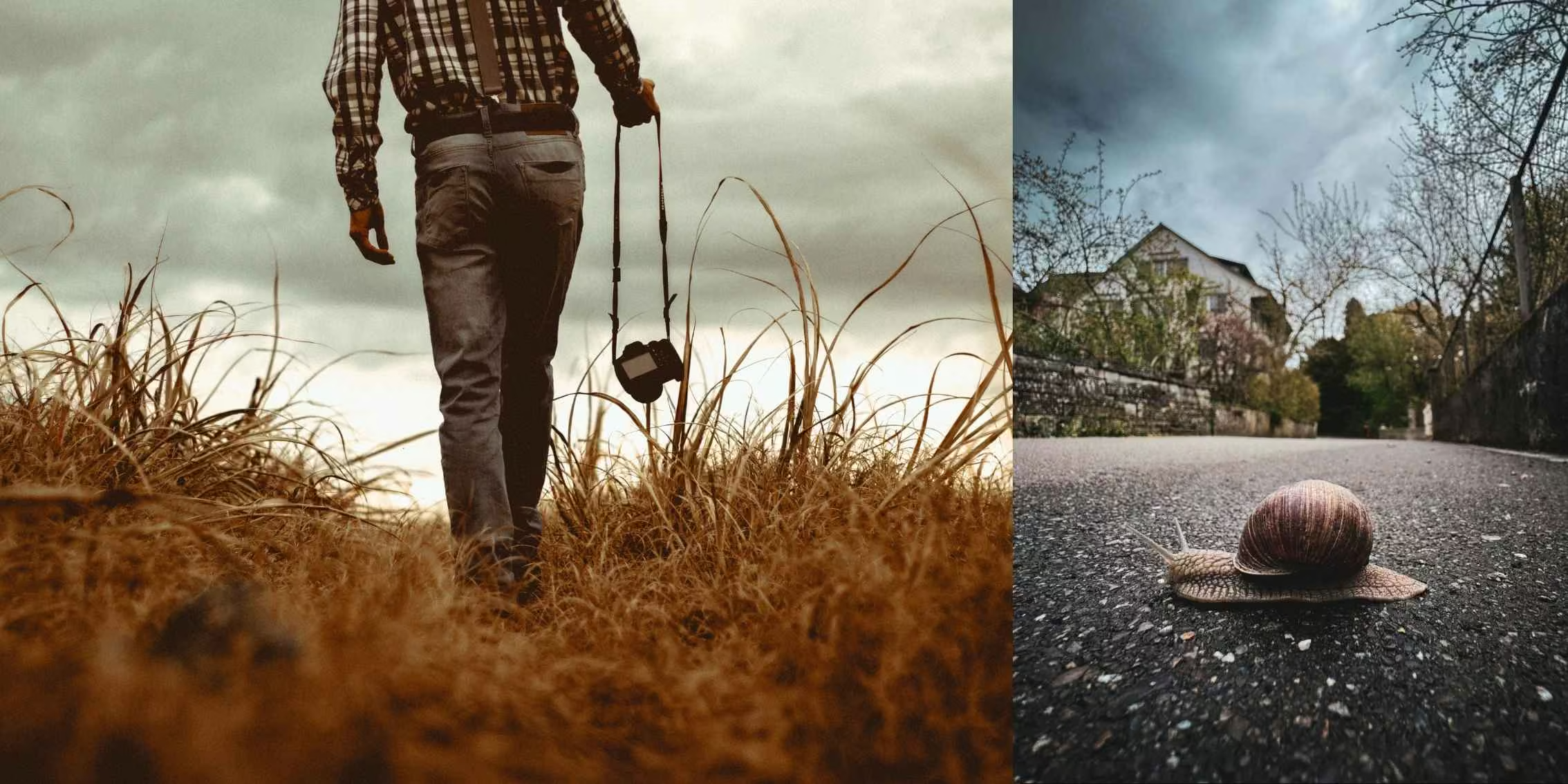
A worm's-eye view is a low-angle shot taken from a position below the normal line of sight. In professional photography, this means placing the camera at or near the floor to look upward. It differs from a standard low-angle camera shot because it often involves the camera being physically on the ground. This perspective mimics the view of a small creature looking up at a much larger world.
We use this three-part framework to help you decide when a low-angle shot is the right choice for your brief. It moves you away from "guessing" and toward intentional design.
Scale and Authority: Use this for architectural shots to make skyscrapers feel endless.
Intimacy and Immersion: Use this in street photography to make the viewer feel like they are part of the action on the pavement.
Environmental Depth: Use this in scenic shots to show the texture of the earth leading toward the horizon.
Selecting the right glass is the first step toward a successful ground-level composition.
Ultra-Wide Lenses (14mm to 24mm): These are the standard for architectural work. They amplify the sense of height but can cause extreme distortion at the edges of the frame.
Fast Primes (35mm): These are perfect for low angle portraits. They offer a natural field of view with enough compression to keep the subject's face looking realistic.
Macro Lenses: We use these for "bug's eye" views of small details. They allow you to get inches away from the foreground texture.
Shooting from the floor changes the physics of your image. You need to adjust your settings to handle the new relationship between your lens and the light.
Focal Length Choices: Wide lenses amplify the sense of scale. They can cause extreme distortion at the edges.
Aperture Management: A higher f-stop, like f/8 or f/11 is often better for a low-angle shot. This keeps both the dirt in the front and the subject in the back sharp.
Focusing Challenges: Use back-button focus or manual override. This stops your camera from focusing on a single blade of grass instead of your primary subject.
Gear and Logistics for Low Angles
You don't need a massive budget to master worm's-eye view photography. You just need the right tools to protect your back and your camera.
Tilting Screens: Use your flip-out LCD to compose your shot without having to lie flat on your stomach.
Mini Tripods: A beanbag is often better than a full-size tripod for getting your lens inches from the pavement.
Remote Triggers: Use a smartphone app or a cable release. This ensures you don't nudge the camera while it's sitting on the ground.
Low-Angle Photography Mistakes to Avoid
This is where many beginners struggle. They take a low shot just because they can rather than because it serves the story. Mastering the worm's-eye view perspective helps you move from snapshots to intentional art.
Mistake: Foreground clutter: Random grass or debris distracts from the subject.
Pro Fix: Scout for a single clean leaf or leading line to guide the eye. Use f/11 and manual focus on that leading element for maximum impact.
Mistake: Over-distortion on faces: Wide lenses can make noses look larger or chins look distorted.
Pro Fix: Tilt the camera slightly or switch to a 24mm or 35mm prime lens to maintain realistic proportions.
Mistake: Dirty lens: Being close to the ground means more dust and moisture.
Pro Fix: Use a microfiber blower and a UV filter to protect your glass. Check your lens for spots between every few shots.
Final Worm's-Eye View Checklist
Use this checklist to ensure your next shoot is professional. Moving your camera to the ground is one of the fastest ways to transform a boring scene into a cinematic moment.
✅ Tilting screen or external monitor ready.
✅ 16 to 35mm wide-angle lens mounted for maximum scale.
✅ Foreground element scouted to lead the eye.
✅ f/8 or higher set for sufficient depth of field.
✅ Camera stabilised using a beanbag or floor-mount.
✅ Remote trigger connected to avoid camera movement.
A low-angle shot is any photograph taken with the camera positioned below the subject's eye line, looking upwards. This technique is a fundamental part of visual storytelling that adds immediate drama and changes how we perceive the scale of a scene.
What is a low-angle shot also called?
A low-angle shot is frequently referred to as a worm's-eye view when taken from the ground looking straight up at a subject. Professionals also call it a floor-level shot or a pavement perspective, depending on the specific height of the lens.
How to take a low-angle shot?
To take a low-angle shot, crouch down or place your camera on the floor to capture your subject from below eye level. Using a wide-angle lens and a tilting screen helps you compose the frame without needing to lie in the dirt.
What does worm's-eye view mean?
Worm's-eye view means capturing an image from the perspective of a small creature on the ground looking up at the world. It is the lowest possible camera angle you can achieve to create a sense of heroic scale and architectural authority.
What is the difference between a low-angle and a worm's-eye view?
A low-angle shot is any photo taken from below eye level, while a worm's-eye view specifically refers to shots taken from the lowest possible point. This usually means the camera is sitting directly on the ground for an upward perspective.
What is the effect of worm's-eye view?
The effect of a worm's-eye view is to make your subject look taller, more powerful, and significantly more imposing to the viewer. It stretches vertical lines to create a sense of endless height while making the foreground feel immersive and gritty.
Is Worm's Eye View a 3-point perspective?
Yes, a worm's-eye view creates a three-point perspective because the vertical lines of buildings or trees converge at a third vanishing point high in the sky. You'll master these geometric principles of composition during the advanced modules of our photography course.
Why do people use worm's-eye view?
People use a worm's-eye view to add cinematic drama and break the boring habit of shooting every photo from a standing position. It is an essential tool for architectural and fashion photographers who want to command attention through unique and powerful perspectives.
Image Source: Adobe Stock
Tips by PI Tutor Justin Aitken
What to Consider When Buying a New Lens
Using a great quality lens will help with creating amazing imagery. Lenses are named and described by their focal length and largest aperture capability. For example, 50mm f/1.8
FOCAL LENGTH: Is an optical property of a lens where light converges. It is measured in mm (e.g. 50mm), the smaller the number the wider the lens focal length. The larger the number, the longer the lens focal length.
MIN/MAX APERTURE VALUES: Every lens will have a minimum and maximum aperture capability. For example, a 50mm f/1.8 lens can achieve a widest/largest aperture of f/1.8 and a narrowest/smallest aperture of f/22.
IMAGE STABILISATION: The stability of the lens optical system and build. If a lens has image stabilisation, then this means it’s possible to achieve sharper images, even when using slower shutter speeds.
ZOOM vs PRIME: It might sound like a good thing if a lens covers a larger focal range (such as 18-200mm, for example), but this is not always the case. A greater focal length range relies on more air and glass layers in the lens build, which isn’t always the best for quality results. These options usually have a lower build quality with plastic construction. A prime lens with a fixed focal length is generally built better with higher specifications and metal components, meaning overall image quality will be superior.
LENS MOUNT: The back/bottom of the lens will have electrical components that join to and communicate with a camera. When purchasing a lens, always ensure that the lens mount is compatible with the camera model and system that you’re using.
BUILD QUALITY: Expanding Zooms vs Primes, another important factor to keep in mind is lens build quality. A lens with a higher build quality will have better weather sealing and be far more durable. A general rule of thumb is that the more expensive a lens is, the higher its build quality.
Justin Aitken is a Multi Award Winning Professional Photographer. His expertise, creative quality and specialty can be seen in his portrait, lifestyle and wedding photography. His personal work consists of music, landscape and travel photography.
Master these skills and build a professional portfolio with our online photography course. In Module 5, Light and Colour, we teach you how to previsualise and think like a camera so you can capture professional angles that move beyond the simple snapshot. You’ll learn exactly how natural light interacts with surface textures to create high-impact commercial imagery.
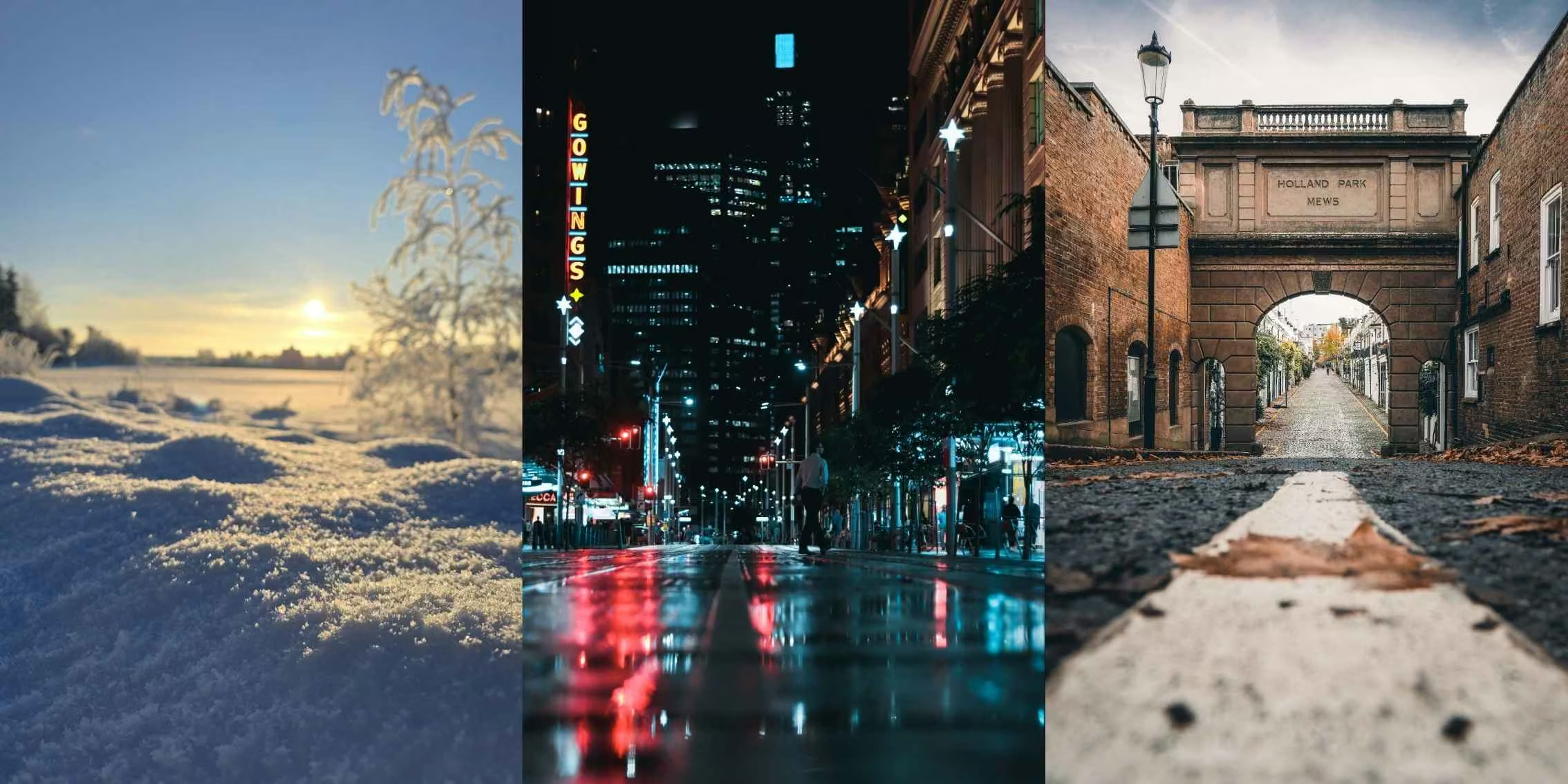
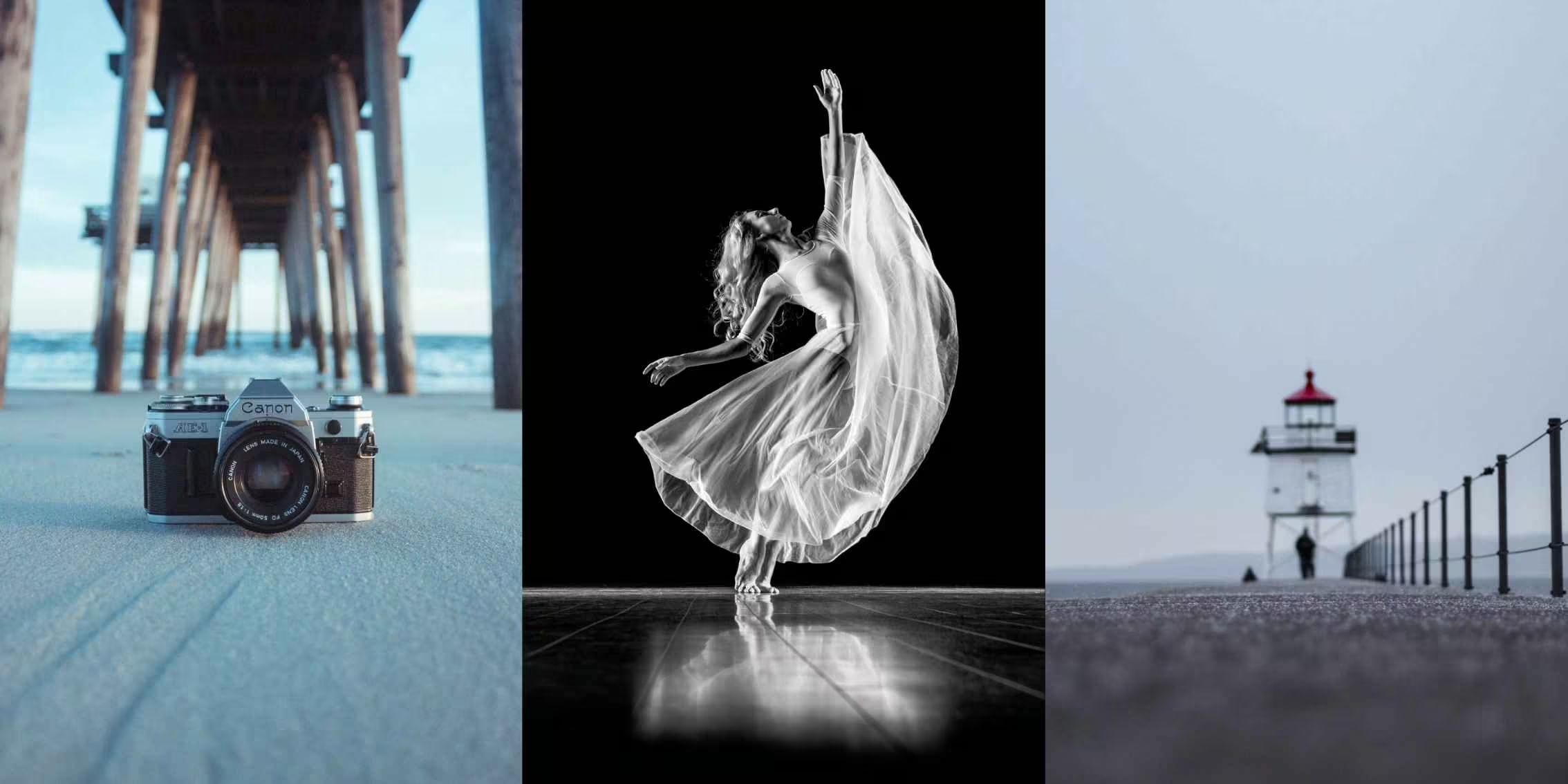
 Image Source: #PIstudent David
Huisman
Image Source: #PIstudent David
Huisman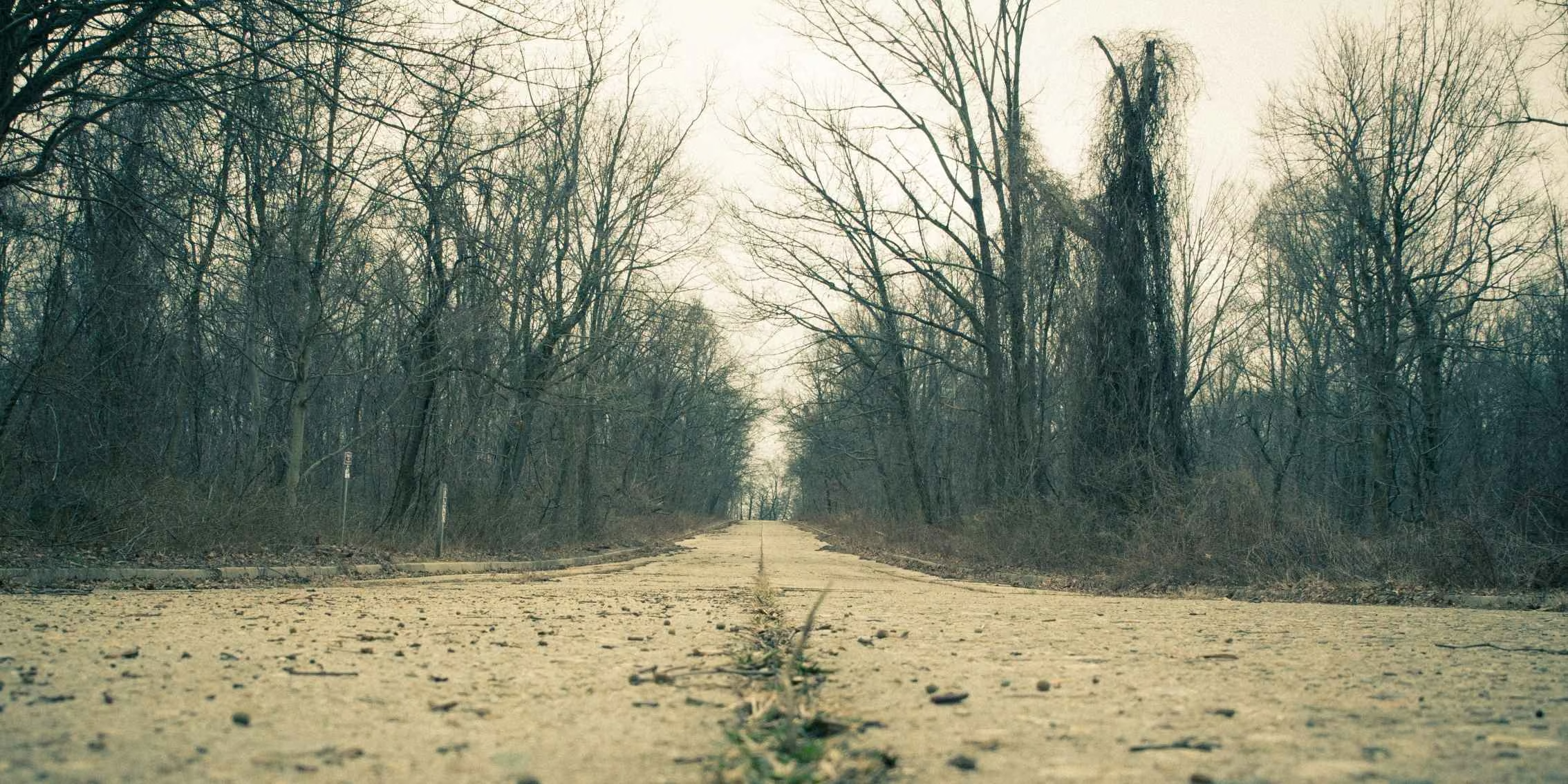









 Argentina
 Australia
 Austria
 Belgium (FR)
 Bolivia
 Brazil
 Canada (EN)
 Chile
Chile
 Colombia
 Costa Rica
 Ecuador
 France
 Germany
 Hong Kong
 India
India
 Indonesia
 Ireland
 Italy
Italy
 Japan
Japan
 Malaysia
 Mexico
 Netherlands
 New Zealand
 Paraguay
 Peru
Peru
 Philippines
 Portugal
 Qatar
Qatar
 South Africa
 Spain
Spain
 Switzerland (DE)
 United Arab Emirates
 United Kingdom
 United States (ES)
 Uruguay